What is Systematic Literature Review: Process, Steps and Guidelines?
Learn what is a systematic literature review, its process, key steps, and guidelines. A clear and simple guide for researchers and PhD scholars.
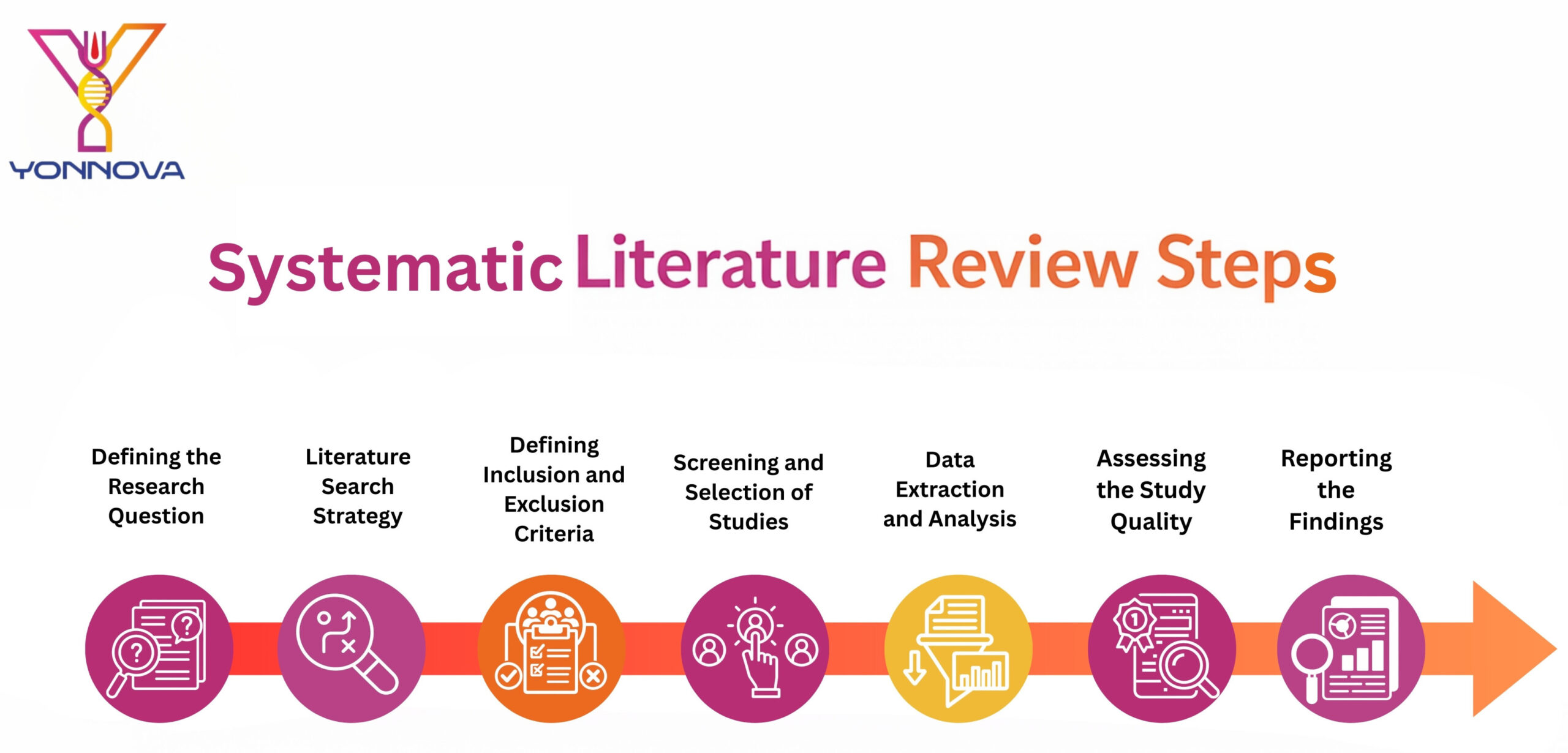
A systematic literature review is a research method that collects all relevant scientific evidence and analyzes relevant data on a research question. This method has become essential in academic and research studies. Unlike traditional literature reviews that may focus on selected studies, systematic reviews follow multiple steps to find all relevant data. This makes them more reliable for making important decisions in healthcare settings.
Introduction to Systematic Literature Review
A systematic literature review is a research method that collects all relevant scientific evidence and analyzes relevant data on a research question. This method has become essential in academic and research studies.
Unlike traditional literature reviews that may focus on selected studies, systematic reviews follow multiple steps to find all relevant data. This makes them more reliable for making important decisions in healthcare settings.
What is a Systematic Literature Review
A systematic literature review is a structured method to gather and analyze all relevant evidence. It answers a clear research question by analyzing all published studies on that research question.
The main purpose is to provide reliable evidence, help researchers understand what is known, and show where additional research is needed.
Purpose and Objectives
- Find all relevant studies on a specific topic.
- Remove bias from the review process.
- Combine findings from multiple studies.
- Provide clear and honest evidence results.
Types of Research Questions
- Questions about treatment effectiveness
- Questions about diagnostic test accuracy
- Questions about real-world effectiveness of medical devices
- Questions about human experiences and behaviors
- Questions about the costs and benefits of interventions
- Questions about risk factors and health outcomes
- Questions about incidence and prevalence
- Questions about epidemiology
Systematic Literature Review Process
The systematic literature review process follows a strict, clear and unique broad multiple method. A structured process reduces personal bias, makes the review easy to repeat, and builds trust in findings.
Before starting, researchers create a protocol. This protocol describes the research question, defines the methods, how studies will be selected, and how data will be analyzed. This planning step keeps the review focused and well-organized.
Systematic Literature Review Steps
Step 1: Defining the Research Question
The first step is to create a clear and specific research question. A good question guides all the other steps. Researchers use frameworks to build strong questions, identifying key parts such as the population being studied, the intervention, a competitor, and expected outcomes, which are generally known as PICOs.
Step 2: Literature Search Strategy
The search strategy is a plan for finding studies.
- Keyword Identification: Researchers identify important words and phrases related to their question, including similar terms. Using the right keywords helps find all relevant studies.
- Search Strings: Search strings combine keywords using special commands for effective database searching.
- Databases and Sources Selection: Researchers choose where to search for studies, including medical databases, university libraries, and online research platforms.
- Documentation of the Search Process: Every search step is documented, including the databases used, keywords searched, and search dates. Good documentation makes the review transparent and easy to repeat.
Step 3: Defining Inclusion and Exclusion Criteria
After finding studies, researchers define inclusion and exclusion criteria
- Inclusion and Exclusion Criteria: These rules decide which studies will be part of the review. Inclusion criteria describe what studies must have. The exclusion criteria describe what should be left out.
Step 4: Screening and Selection of Studies
After defining the inclusion and exclusion criteria, researchers select which ones to include. This process is usually done by at least two researchers working independently to reduce mistakes and bias.
- Title and Abstract Screening: First screening looks at titles and abstracts. Clearly irrelevant studies are removed.
- Full-text Review: These selected studies are read completely and checked against the previously defined criteria. Only studies meeting all criteria are kept.
Step 5: Data Extraction and Analysis
Once the studies are selected, the researchers collect information from them.
- Extracting Relevant Data: Key information is taken from each study, including methods, participants, results, and conclusions. A standard form ensures the same information is collected from every study.
- Synthesizing Findings: The data is combined and analyzed. Researchers look for patterns and differences across the studies. Statistical methods may be used to combine the results.
Step 6: Assessing the Study Quality
Once the data has been analyzed, the overall quality of the included studies is assessed.
- Quality Assessment Tools: Study quality assesses using different Risk of Bias tools such as Cochrane Risk of Bias Tool, Jadad Scale, Newcastle-Ottawa Scale, etc.
Step 7: Reporting the Findings
The final step is sharing results.
- Structuring Results: Results are presented clearly and are organized, describing the search process, included studies, and findings.
- Ensuring Transparency: The report must show all the steps taken, problems faced, and decisions made. Complete reporting helps readers to trust the findings.
Systematic Literature Review Guidelines
Several organizations have created guidelines for conducting systematic literature reviews.
1. Commonly Followed Guidelines
The most widely used guideline is PRISMA (Preferred Reporting Items for Systematic Reviews and Meta-Analyses). It provides a checklist and flow diagram showing how the studies were found and selected. Other guidelines exist for specific types of reviews.
2. Importance of Standardized Guidelines
Guidelines (such as PRISMA, Cochrane Handbook for Systematic Reviews, MOOSE, etc.) ensures reviews are done correctly, improving quality and reliability. They make it easier for others to understand and use these findings.
3. Ethical and Methodological Considerations
Researchers must report all findings honestly and acknowledge the limitations of their methods or data.
Advantages of Systematic Literature Review
Systematic literature reviews offer many benefits.
1. Reliability and Reduced Bias
Following strict methods makes systematic reviews more reliable than traditional reviews. This clear process reduces personal bias and ensures that all relevant studies are considered.
2. Comprehensive Coverage
A systematic literature review aims to find all research on a topic, providing a complete picture rather than single or selective studies or reviews.
3. Value in Evidence-Based Research
These reviews are essential for evidence-based practices. Healthcare providers use them for treatment decisions, policymakers create guidelines from them, and researchers use them to identify gaps. They save time by bringing together many studies in one place and preventing duplication of research.
Conclusion
A systematic literature review is a powerful research method that uses a clear, structured process to find and analyze all available research on a specific question. The process included seven main steps: defining the research question, developing a literature search strategy, setting inclusion and exclusion criteria, screening and selecting studies, extracting and analyzing data, assessing study quality, and systematically reporting the findings.
Following systematic literature review steps and guidelines ensures that reviews are thorough, reliable, and bias-free. These reviews play a vital role in advancing knowledge and supporting evidence-based decision-making across many fields. By using standardized methods and maintaining transparency, systematic literature reviews help researchers, practitioners, and policymakers make informed decision making based on the best available evidence.
Expert Support for Your Systematic Literature Review
Need expert support for your systematic literature review?
Our team at Yonnova Scientific Consultancy offers a complete package of systematic literature reviews, including PROSPERO registration and publication support.
Get in touch with our experts to discuss your research needs.
FAQs
What are the 7 steps of a systematic literature review?
The seven steps included defining a clear research question, developing a literature search strategy, setting inclusion and exclusion criteria, screening and selecting studies, extracting and analyzing data, assessing study quality, and systematically reporting the findings with transparency.
Which databases are best for systematic reviews?
Commonly used databases for systematic reviews include PubMed, Scopus, Web of Science, Embase, Cochrane Library (CENTRAL), Ovid, CINAHL, PsycINFO, ClinicalTrials.gov, and Google Scholar, depending on the research domain and study objectives.
Is the SLR qualitative or quantitative?
A systematic literature review can be qualitative, quantitative, or both. It depends on the research question, type of data analyzed, and whether statistical synthesis, such as meta-analysis, is included.
What is the difference between a literature review and a systematic review?
A literature review is usually narrative and flexible in approach, whereas a systematic review uses predefined criteria and guidelines to minimize bias and ensure comprehensive and reliable results.