What is a Research Gap: Definition, Types and How to Find It
Learn what a research gap is, the different types, and how to find one from existing literature. A simple guide for researchers at every level.
What is a Research Gap and How to Identify It from Literature
Every researcher faces one important question before starting their work: “Has this already been studied?” It sounds simple, but finding the right answer takes time and requires careful reading. Research is not only about picking a topic you find interesting. It is about finding a space where your work can make a real difference.
When you begin a new study without checking what already exists, you risk repeating the work that others have already done. That is not just a waste of your time. It also means that your research does not add anything new to the field.
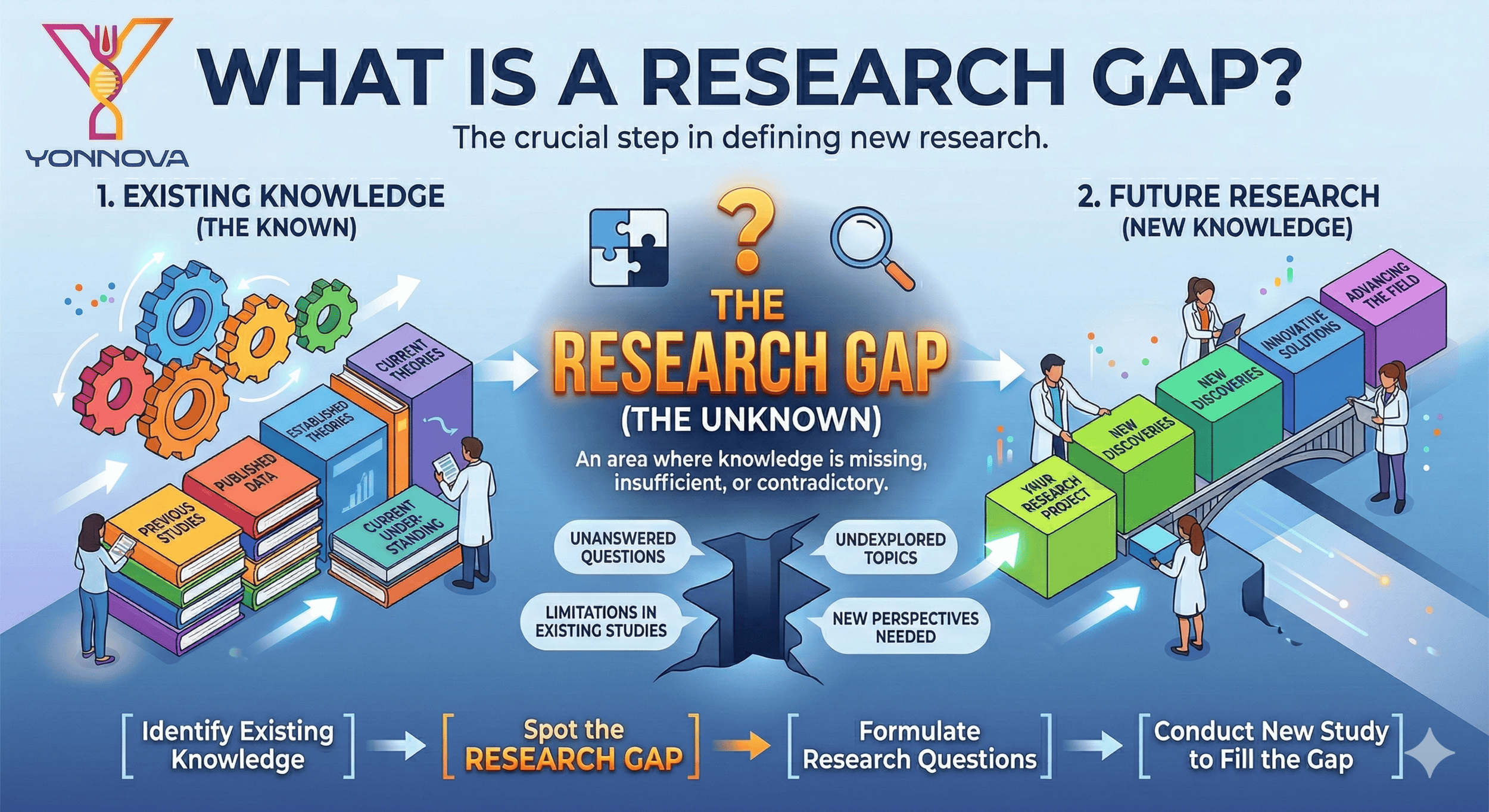
This is why identifying a research gap is important. A research gap shows you where existing knowledge ends and where a new study can begin. It provides your work with a clear purpose and a strong foundation.
Identifying a research gap and how to find it from existing literature is one of the most important skills in research. This blog will guide you through the definition, types of research gaps, and a simple step-by-step process for identifying one from the literature.
What is a Research Gap?
A research gap is a question that has not yet been answered or an area that has not been sufficiently studied in existing research. In simple terms, it is the missing piece in a field of knowledge.
When researchers study a topic, they cannot cover every aspect. However, some of these areas remain untouched. Some questions have been raised, but never answered. These open spaces of knowledge are referred to as research gaps.
You may also hear the term literature gap’. Both terms are the same. A literature gap refers to the same unexplored or underexplored areas found when reading through published studies and articles. When knowledge is missing in practice, it will also be missing from the written literature.
Why Does it Matter?
Identifying a research gap ensures that your work is original and adds something new to the field. Without identifying a gap, you risk repeating work that has already been done, which wastes time and resources.
Types of Research Gaps
Not all research gaps look the same. The four main types of research gaps are as follows:
- Classic literature gap: This occurs when a topic has never been studied before. It is completely new territory. For example, when a new technology emerges, there is very little or no research on it.
- Contextual gap: This occurs when a topic has been studied in one place or with one group of people but not in a different location or with a different population. For example, a study may have been conducted in Western countries but not in South Asian contexts.
- Methodological Gap: This type of gap appears when the methods used in existing studies have flaws or limitations. Research exists, but the way it was conducted leaves room for a better or more accurate study.
- Contradiction gap: This gap exists when different studies on the same topic produce different or conflicting results. When researchers cannot agree on a finding, it signals the need for more research to settle the question.
- Practical/Clinical gap: This gap occurs when research exists but is not being applied in real-world clinical or professional practice. The evidence is available, but it has not been translated into routine use. This type of gap is especially relevant in medical and healthcare research, where findings may exist in literature but are yet to influence treatment guidelines or clinical decision-making.
How to Identify a Research Gap from Literature
This is the most practical part. Identifying a research gap requires careful and focused reading. Follow these steps:
Step 1: Start with a Thorough Literature Review
Read as many published studies, journal articles, and academic papers on your topic as possible. Use academic search databases to find relevant sources. The goal is to understand what has already been studied and the conclusions researchers have reached. Focus on papers closely related to your topic, especially the most recent and highly cited works.
Step 2: Read the “Limitations” and “Future Research” Sections
This is one of the most useful steps. Most researchers point out gaps in their own work. When you read a paper, go directly to the Limitations, Conclusion, and Future Research sections. Authors often write statements such as:
- “This area has not been studied in this specific context.”
- “Future research should explore…”
- “The findings of this study may not apply to…”
These are direct hints informing you where the next research opportunity lies.
Step 3: Look for Language Cues in the Literature
When reading papers, pay attention to specific phrases that signal a gap. Watch out for sentences like:
- “Has not been studied…”
- “Further research is needed…”
- “The key question remains…”
- “It is important to address…”
- “Little is known about…”
These phrases have been marked. They show that the authors themselves know that something is missing.
Step 4: Read Systematic Literature Reviews and Meta-Analyses
Systematic literature reviews and meta-analyses examine a large number of studies on one topic and summarize what is known. These are great starting points because they provide a broad picture of the field. They also highlight trends, disagreements, and areas that have been understudied. Reading even one or two good systematic reviews can save you a lot of time.
Step 5: Ask Critical Questions About Existing Studies
As you read, keep asking yourself questions, such as:
- Who studied? Were certain groups left out?
- What was measured? Were some variables ignored?
- Where was the study conducted? Can the findings apply elsewhere?
- When was it done? Is the data outdated?
- How was it done? Were there any flaws in the method?
These questions help you think beyond what is written and identify what is missing.
Common Mistakes to Avoid
Even experienced researchers make these mistakes when searching for a research gap:
- Assuming a topic is unexplored without reading sufficiently: A topic may seem new to you, but could have many published studies. Always search widely before concluding there is a gap.
- Confusing a broad topic with a specific gap: A research gap is not simply a large topic. It is a specific, unanswered question within a topic. “Climate change” is not a gap. “The effect of climate change on rice farming in a specific region” could be one.
- Not checking for recent publications: A gap that existed two years ago may have been filled by recent research. Always check for the latest studies before finalizing your gap.
Conclusion
A research gap is simply where existing knowledge ends and where your work can begin. This is the foundation of meaningful research. Without identifying a clear gap, your study may not contribute anything new to the field.
Depending on your field, the gap you identify may be a classic literature gap, a contextual gap, a methodological gap, a contradiction gap, or a practical/clinical gap. Each type points to a different kind of missing knowledge, and recognizing which type applies to your work helps you frame your research with greater precision.
The best way to identify a research gap is to read widely and with purpose. Begin with a strong literature review, pay attention to the language used in existing studies, and ask critical questions at every step.
Once you have identified your gap, your next step is to turn it into a clear and focused research question. That question becomes the starting point of your study and explains the significance of your research.
Ready to take the next step? Start building your literature review today and look for questions that have not yet been answered.
Need Help Identifying a Research Gap?
Identifying a research gap requires time, deep reading, and a strong understanding of your field. If you are unsure where to start or feel stuck in the process, you do not have to do it alone.
At Yonnova Scientific Consultancy, we help researchers at every stage of their research journey. Our team conducts detailed literature reviews, identifies research gaps, and supports you from topic selection to publication in PubMed, Scopus, SCI/SCIE, and Web of Science-indexed journals.
Schedule a Free Consultation and let our experts guide you to the right research direction today
FAQs
1. What exactly is the research gap?
A research gap is an area or question that has not been studied or answered in existing research. It is the missing piece of knowledge in a particular field that requires further exploration.
2. What should we write in a research gap?
In the research gap, you should clearly state what is missing in the existing literature and why it matters. Explain what has not been studied, who has been left out, or what question still needs an answer.
3. How do you say there is a gap in research?
You can use phrases like “existing studies have not been explored,” “little is known about,” or “further research is needed on this topic.” This clearly signals that a gap exists in the current body of knowledge.
4. What are the types of research gaps?
The main types are literature gap, contextual gap, methodological gap, contradiction gap, and practical/clinical gap. Each type indicates a different kind of missing or incomplete knowledge in existing research.
5. How do I find my research gap?
Begin by reading existing studies on your topic and pay close attention to the limitations and future research sections. Look for unanswered questions, missing populations, or conflicting findings across studies.