Targeted Literature Review: Meaning, Purpose, and Use
Learn what a targeted literature review is, its purpose, key features, and how it is used in research to analyze focused and relevant studies.
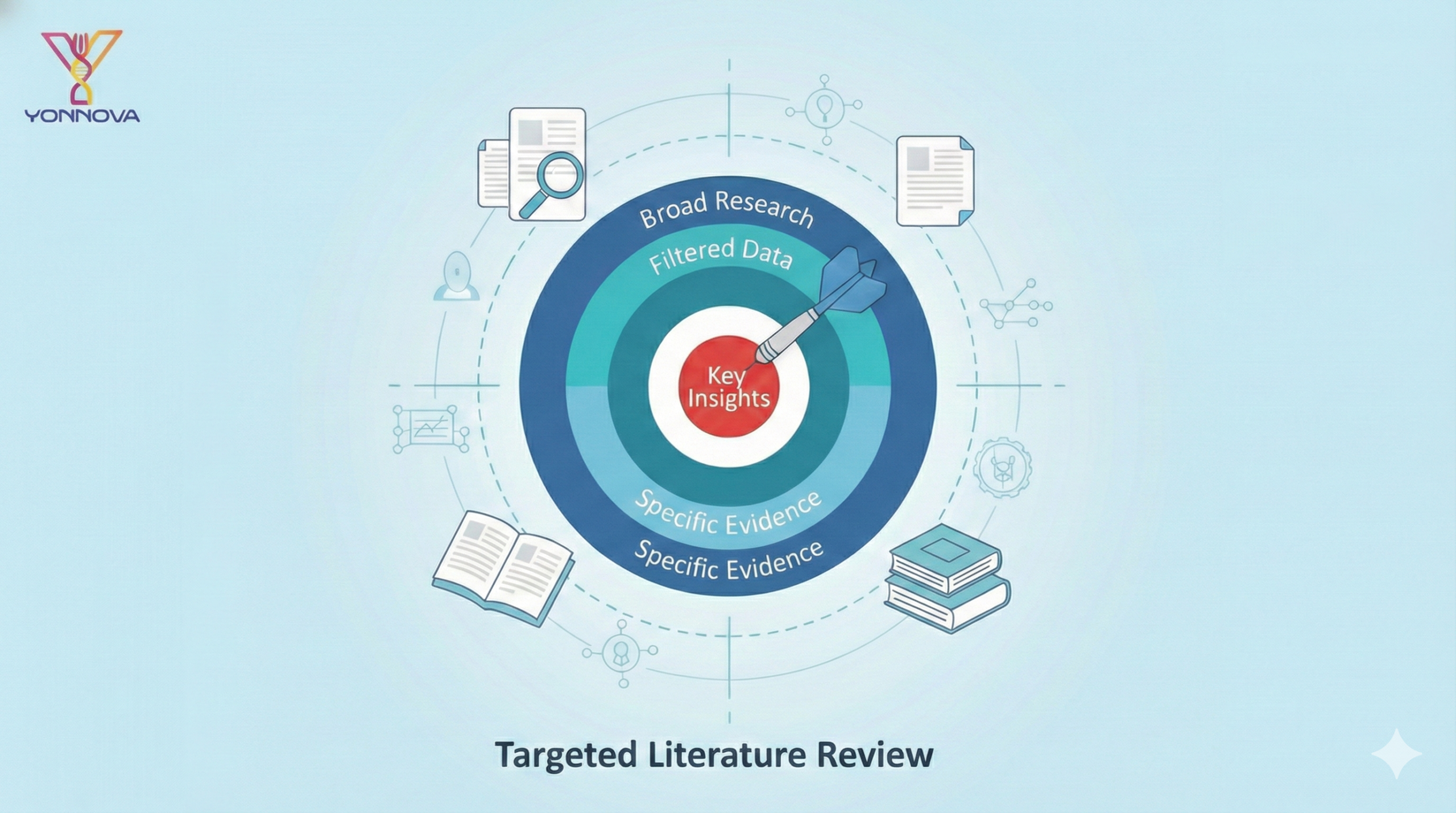
Literature reviews are a key part of research. They help researchers understand what has already been studied in their fields. Every year, thousands of new studies are published in different fields. This makes it difficult for researchers to read everything related to their topics. However, not all research questions require a complete review of all available studies. Sometimes, a focused approach works better. When you have a specific question to answer or a tight deadline to meet, reading everything is impractical. You need a method that gives you the right information without wasting time. This is where a targeted literature review is useful. It offers a smart way to review existing research by focusing only on what matters most to your specific research question. This approach has become popular among researchers, students, and professionals who need quick but reliable answers.
What Is a Targeted Literature Review?
A targeted literature review is a focused approach to reviewing existing research on specific topics. It looks at selected studies that directly answer a particular research question. Unlike complete reviews that cover everything on a topic, targeted reviews focus on relevant literature.
This type of review is also known as a focused literature review. Both terms have the same meaning. The main goal is to gather specific evidence that helps answer a clear research question without wasting time on less relevant work.
A targeted literature review serves a specific purpose. It provides background information to support research proposals, protocols, or concept papers. It helps researchers understand the current knowledge of their questions without reading every study in the field.
Key Characteristics of a Targeted (Focused) Literature Review
1. Narrow and Specific Research Focus
The first feature of a targeted literature review is its narrow scope of focus. It does not try to cover broad topics. Instead, it focuses on answering a specific question or exploring a particular aspect of a larger topic. This narrow focus helps keep the review manageable and highly relevant to your research needs.
2. Selective Study Inclusion
Not every study makes it into a targeted literature review. Researchers carefully choose studies based on how well they answer their research questions. This selection uses clear rules regarding what to include and exclude. The selection process is deliberate and based on quality and relevance.
3. Goal-Oriented Literature Analysis
Every targeted literature review has a clear purpose. This may be to find evidence for a specific claim, understand one aspect of a problem, or support a research proposal. This goal guides the entire review process.
When to Use a Targeted Literature Review
1. Early-Stage Research Planning
When starting your research, a targeted literature review helps you understand what is already known. It shows where your work fits, without requiring months of reading.
2. Identifying Evidence for a Specific Research Question
If you need to answer a specific question, a targeted review helps you find the exact evidence you need.
3. Supporting Proposals, Protocols, or Concept Papers
Research proposals require a literature review section. A targeted review provides background information to demonstrate your understanding of the topic.
How to Write a Focused (Targeted) Literature Review
Writing a targeted literature review follows a clear process:
1. Define a Clear Research Question
Start with a specific question. Your question should be narrow enough to guide your search but broad enough to find useful studies. For example, instead of “What is diabetes?”, ask “How do lifestyle changes affect Type 2 diabetes management?”
2. Set Inclusion and Exclusion Criteria
Decide what types of studies you will include. Think about publication date, study design, population, and language. These rules keep your review focused.
3. Identify Relevant Databases and Sources
Choose the right places to search for information. Academic databases are the most effective. Select databases that cover your field of study.
4. Screen and Select Key Studies
Review the titles and summaries of the studies. Keep only those that match your inclusion rules. This ensures you work with relevant studies.
5. Analyze and Synthesize Findings
Read selected studies carefully. Look for patterns, agreements, and disagreements. Think about what the studies mean together. Note any gaps in current knowledge.
6. Present Findings in a Structured Manner
Organize your findings clearly and concisely. You might group them by theme, date, or the methods used. Use simple headings and write clearly.
Advantages of a Targeted Literature Review
1. Saves Time and Resources
You focus only on relevant studies, spending less time reading them. This makes targeted reviews faster than systematic literature reviews.
2. Improves Relevance of Findings
Every study directly relates to your question. Your findings are more useful and easier to apply in practice.
3. Helps in Quick Evidence Mapping
When you need to understand a specific issue quickly, a targeted review helps you map evidence efficiently.
Limitations of a Targeted Literature Review
1. Risk of Missing Broader Evidence
You focus narrowly, so you might miss important studies outside your search criteria.
2. Potential Selection Bias
Researchers might favor studies that support their ideas. Being aware helps you stay objective.
3. Not Suitable for Exhaustive Research Needs
If you need complete information about a topic, a targeted review is not enough.
Conclusion
A targeted literature review is a practical and efficient tool for researchers who require focused answers. This is the same as a focused literature review, describing this selective approach.
This method works well when starting new research, writing proposals, or requiring quick evidence. This saves time while providing valuable insights.
The key to a good targeted review is its clarity. Define your question clearly, set strict selection rules, and stay focused on your question. Although this approach has limitations, it offers an efficient way to build knowledge.
A targeted literature review does not replace a complete review when needed. When used appropriately, it helps researchers to move forward with confidence.
Whether you are a student or a researcher, understanding how to conduct a targeted literature review is valuable. It helps you find exactly what you need to support your work efficiently.
Need Expert Support for Your Targeted Literature Review?
Preparing a high-quality, targeted (focused) literature review requires a clear research question, the right study selection strategy, and a precise synthesis of evidence.
Yonnova Scientific Consultancy supports researchers, PhD scholars, and healthcare professionals with expert-driven literature reviews that are accurate, well-structured, and aligned with research objectives.
Whether you need help with framing a targeted literature review, refining your search strategy, or synthesizing key findings, our team ensures clarity, relevance, and scientific rigor at each stage.
FAQs
1. What is a targeted literature review?
A targeted literature review is a focused review of existing research that synthesizes key studies on a specific research question or topic rather than covering all literature broadly. It aims to highlight the most relevant evidence and is often narrative in nature.
2. How is a targeted literature review different from a systematic review?
Unlike a systematic literature review, which attempts to comprehensively collect and analyze all available evidence using strict protocols, a targeted literature review focuses on select relevant studies and provides a more narrow, specific overview of evidence without an exhaustive process.
3. When should you use a targeted literature review?
Targeted literature reviews are most useful when you need specific insights on a focused research question, such as to clarify trends, support a hypothesis, or inform research directions, without needing the full breadth of a systematic literature review.
4. How many studies should be included in a targeted literature review?
There is no fixed number; the goal is to include sufficient high-quality, relevant studies that adequately address the research focus. The selection should be justified based on relevance, quality, and contribution to the research question.
5. Can a targeted literature review include both qualitative and quantitative studies?
Yes. A targeted literature review synthesizes findings from both qualitative and quantitative research, depending on the review’s scope and objectives.
6. Do you need inclusion and exclusion criteria for a targeted literature review?
While not as rigid as with systematic literature reviews, defining clear inclusion and exclusion criteria helps ensure that the review remains focused, transparent, and reproducible.