How to Write a Research Proposal for PhD
Learn how to write a research proposal for PhD with a clear structure, purpose, and practical tips to get your application approved.
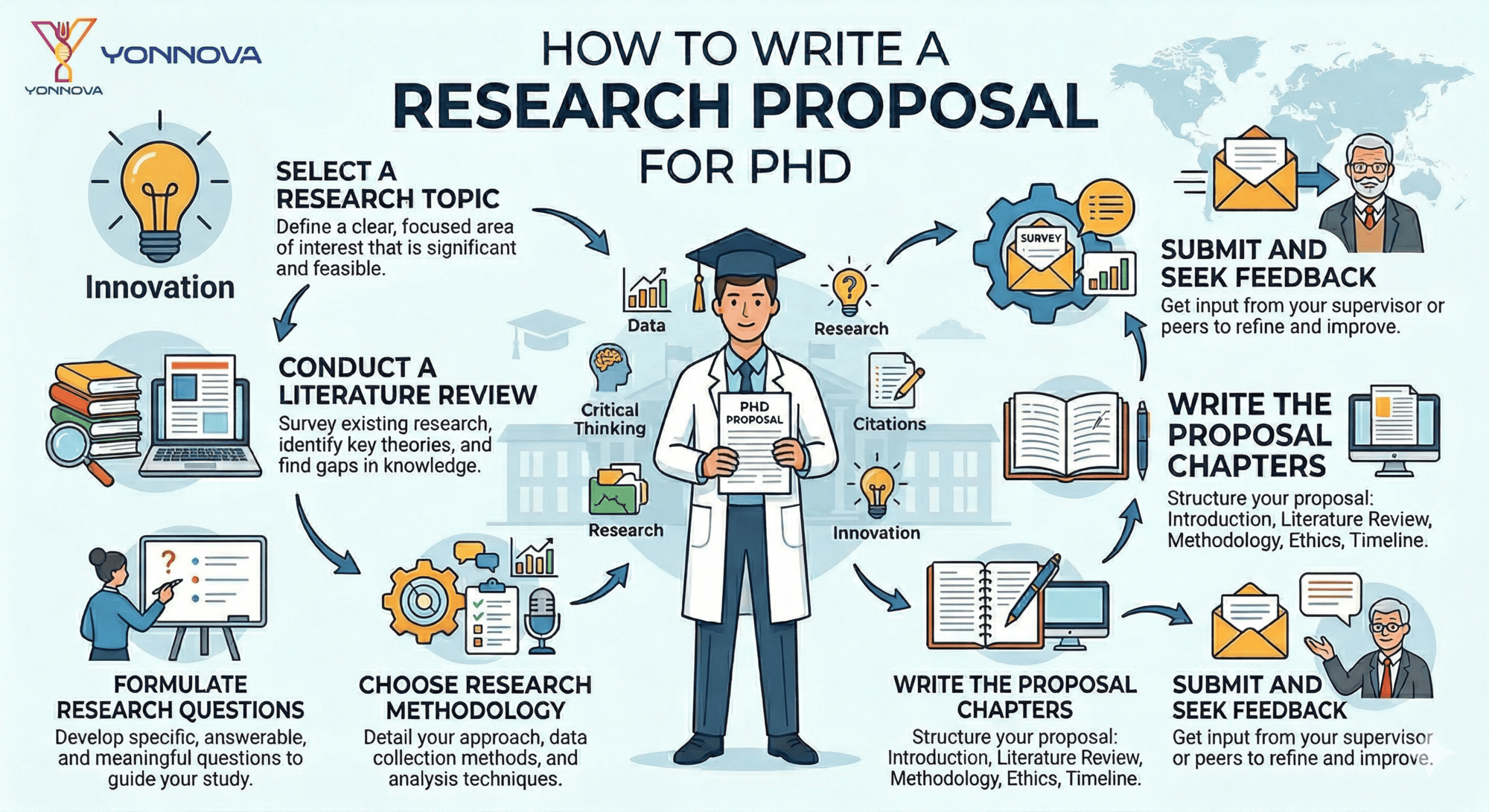
How to Write a Research Proposal for PhD
If you are planning to apply for a PhD program, one of the first things you will need to submit is a research proposal. This document plays a significant role in determining whether you will be admitted to the program.
Many students feel unsure about how to write a research proposal for a PhD because they have never done it before. The good news is that once you understand what goes into it, the process becomes much more manageable.
A PhD research proposal is a written document that explains what you plan to study, why it matters, and how you will conduct the research. Think of it as a plan that helps the university understand your research idea before you begin your PhD journey.
It is not merely a formality. Universities and supervisors use it to assess whether you are a suitable fit for the program and whether your proposed study has academic value.
In this blog, you will learn about the purpose of a research proposal, the key sections it must include, practical tips to make it stand out, and common mistakes you should avoid.
What Is the Purpose of a Research Proposal?
Before you begin writing, it helps to understand why a research proposal is needed in the first place. A well-written proposal serves three key purposes:
- This shows that your research idea is original and worth investigating.
- This demonstrates that you have a good understanding of your subject area and the existing research on it.
- This helps the university identify the right supervisor for you based on your research topic and interests.
A strong proposal demonstrates to the university that you are prepared for doctoral-level research and that you have a clear direction for your research.
Research Proposal Structure: Key Sections to Include
Most universities follow a standard research proposal structure. Although the exact format may vary from one institution to another, the core sections remain unchanged. Here is a breakdown of each section that you must include:
1. Title
Your title should be short, clear, and directly related to your research topic. Avoid using complicated language. A good title provides the reader with an instant idea of what your research is about.
2. Introduction / Research Problem
This section introduces the topic and explains the problems to be addressed. You need to tell the reader why this problem is important and why it needs to be studied. The explanation should be specific and avoid being too broad.
3. Literature Review
A literature review demonstrates your awareness of existing research on your topic. You must briefly summarize what other researchers have found and, more importantly, point out the gaps in the current knowledge. This gap is what your PhD research aims to fill. Universities place a lot of importance on this section, so give it enough attention.
4. Research Questions / Objectives
Clearly state the questions that your research seeks to answer. These should be focused and realistic in nature. You can also list your research objectives, which are the specific goals you want to achieve through your study. Keep them aligned with the problem you identified in the introduction.
5. Plan of Work
A plan of work outlines how you intend to organize and manage your research from the start to the finish. It gives the university confidence that you have thought carefully about the practical aspects of your PhD, including how you will allocate your time across the different phases of the project. This section should be realistic, structured, and directly aligned with your research objectives.
6. Methodology
This section explains how you plan to conduct your research. You need to describe the methods you will use to collect data and how you will analyze them. Whether you plan to use qualitative methods, quantitative methods, or a combination of both, explain your choice and why it is the right approach for your study.
7. Timeline / Work Plan
Provide a realistic timeline for your research. Break it down into stages such as literature review, data collection, analysis, and writing. This will show the committee that you have carefully considered the duration of each part of your PhD and that your plan is achievable.
8. References
List all the sources you referred to while writing your proposal. Use a standard referencing format, such as APA, MLA, or the one recommended by your university. Proper referencing demonstrates academic integrity and strengthens the credibility of your proposal.
9. Expected Significance or Impact
This section explains the broader value of your research. Describe how your findings could contribute to your field, influence policy, inform practice, or open new directions for future studies. Even at the proposal stage, demonstrating an awareness of your research’s potential significance shows that you are thinking beyond the immediate study and understand its place within the wider academic conversation.
Tips to Make Your PhD Research Proposal Stand Out
Writing a good proposal is not simply about following a format. Here are some practical tips to help your proposal make a positive impression:
- Be specific, not broad. A focused research question is easier to evaluate and demonstrates clarity of thought.
- Align your research topic with that of a potential supervisor’s area of expertise. This increases your chances of receiving appropriate guidance and a favorable response.
- Show originality. Your proposal should add something new to the field rather than simply repeating what others have already studied.
- Keep it concise and well-structured. A clear and easy-to-read proposal leaves a better impression than one with overly complex language.
In addition, ensure to check the specific word count and format requirements of the university to which you are applying, as these may vary.
Common Mistakes to Avoid
Even strong researchers can make mistakes in their proposals. Here are some common mistakes that you should avoid:
- Lack of clarity regarding the research questions. If the problem is not clearly defined, the reviewers will find it difficult to evaluate your proposal.
- Ignoring the Research Gap. Your literature review must clearly show what is missing in the current body of research and how your work addresses this gap.
- Setting unrealistic timelines is another factor. If your work plan does not match the actual time needed for each phase, this can raise doubts regarding your planning abilities.
- Over-promising the scope. Maintain achievable objectives within the PhD timeframe. Attempting to cover too much at once can weaken your proposal.
Proofreading your proposal carefully before submission is equally important. Even small errors in grammar or structure can affect the overall impression.
Conclusion
Writing a PhD research proposal does not have to be overwhelming. When you understand the structure and purpose of each section, it becomes a stepwise process.
Start with a clear title, define your research problem, review the existing literature, set your research questions, explain your methodology, and lay out a realistic timeline for your research.
A well-written proposal shows the university that you are serious, prepared, and capable of conducting independent research. Use the structure and tips shared in this blog as a guide and start drafting your proposal today.
The earlier you begin, the more time you will have to review and refine it, before submission.
Need Help Writing Your PhD Research Proposal?
Writing a strong research proposal requires time, effort, and a clear understanding of what universities expect. If you are unsure where to start or want expert support, Yonnova Scientific Consultancy is here to help.
We have helped hundreds of researchers in fields such as Medicine, Biology, Chemistry, Pharmacy, and more to achieve their academic goals.
Whether you need a proposal written from scratch or want someone to review and strengthen what you already have, our experts will guide you every step of the way.
Get in touch with Yonnova Scientific Consultancy today and take the first step toward your PhD journey with confidence.
FAQs
1. How to write a research proposal for a PhD program
It starts with a clear research problem, provides background literature, defines the objectives and research questions, explains the methodology, and describes the expected outcomes. Keep it structured, concise, and aligned with your university’s guidelines.
2. Can ChatGPT write a proposal?
ChatGPT can help draft or organize ideas for a research proposal; however, it cannot replace expert academic guidance. It may lack subject-specific depth, university formatting requirements, and originality that reviewers expect. For a proposal that truly reflects your research potential, it is always better to work with experienced academic professionals.
3. How long is a typical PhD research proposal?
A typical PhD research proposal is between 2,500 and 3,000 words long. Note that bibliographies and reference lists are often excluded from these word counts; therefore, check your university’s specific guidelines. Some universities may require shorter concept notes, whereas others may request more detailed proposals.
4. How many pages is a PhD proposal?
Most PhD proposals range from 10 to 15 pages depending on institutional requirements. Specific guidelines provided by the university or department are always checked.
5. What are 5 things all proposals should include?
Every research proposal should include the following elements: (1) research problem, (2) literature review, (3) research objectives/questions, (4) methodology, and (5) expected outcomes or significance of the study.